
An article entitled “Ovocidal Effect of Achillea salicifolia and Hedysarum gmelinii Extracts on Toxocara cati Eggs in an in Vitro Experiment” has been published in the international peer-reviewed journal American Journal of Animal and Veterinary Sciences (2025, Vol. 20, Issue 4, pp. 386–394) (full text of the article is here).
The journal is indexed in international scientometric databases and belongs to Q2 quartile, with a percentile is 61, confirming the high academic significance of the publication.
The research was carried out with financial support from the Committee of Science of the Ministry of Science and Higher Education of the Republic of Kazakhstan under the Program-Targeted Funding (BR 24992761).
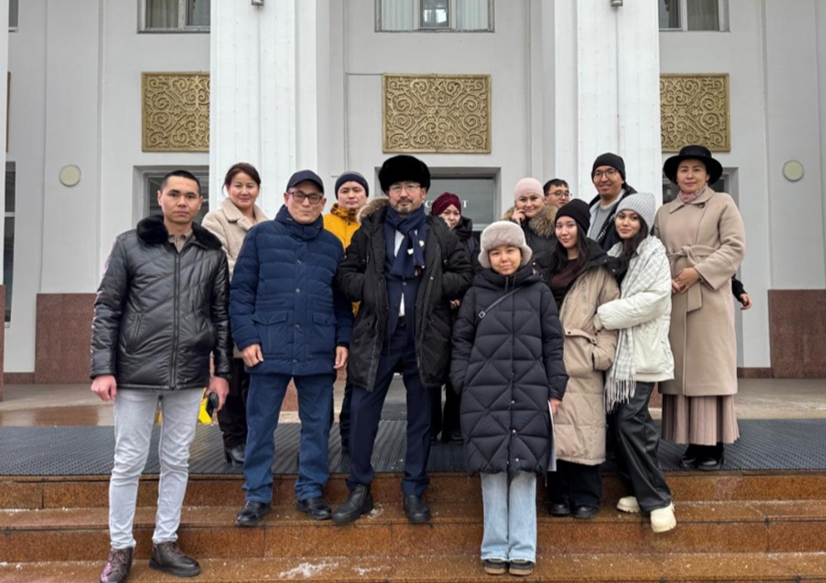
The research team included scientists from K. Kulazhanov Kazakh University of Technology and Business, S. Seifullin Kazakh Agrotechnical Research University, and other scientific institutions.
From KazUTB, Professor-Researcher Yerlan Suleimen participated in the project, providing scientific supervision, coordination, and resource support.
Key Research Findings
The study presents a comparative evaluation of the ovicidal activity of Achillea salicifolia and Hedysarum gmelinii plant extracts against Toxocara cati eggs under in vitro conditions.
The key findings include:
- a pronounced dose- and time-dependent activity of plant extracts;
- at 10% concentration, up to 87–90% of eggs became non-viable after 48 hours;
- the efficacy of plant extracts approached that of phenol (94%), while demonstrating significantly higher environmental safety;
- confirmation of the potential of phytopreparations for sanitary treatment and environmental decontamination.
The results expand scientific knowledge regarding the application of domestic plant resources for the development of environmentally friendly veterinary and sanitary agents.
Publication in a Q2-ranked journal highlights the strong scientific capacity of KazUTB research teams and their contribution to veterinary parasitology and phytopharmacology.
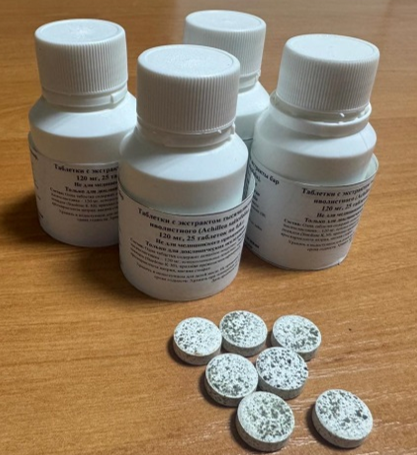
It should be noted that a veterinary drug was developed using Achillea salicifolia extract.
The university community congratulates the authors on this achievement and wishes them continued scientific success, new international collaborations, and further publications in high-impact journals!