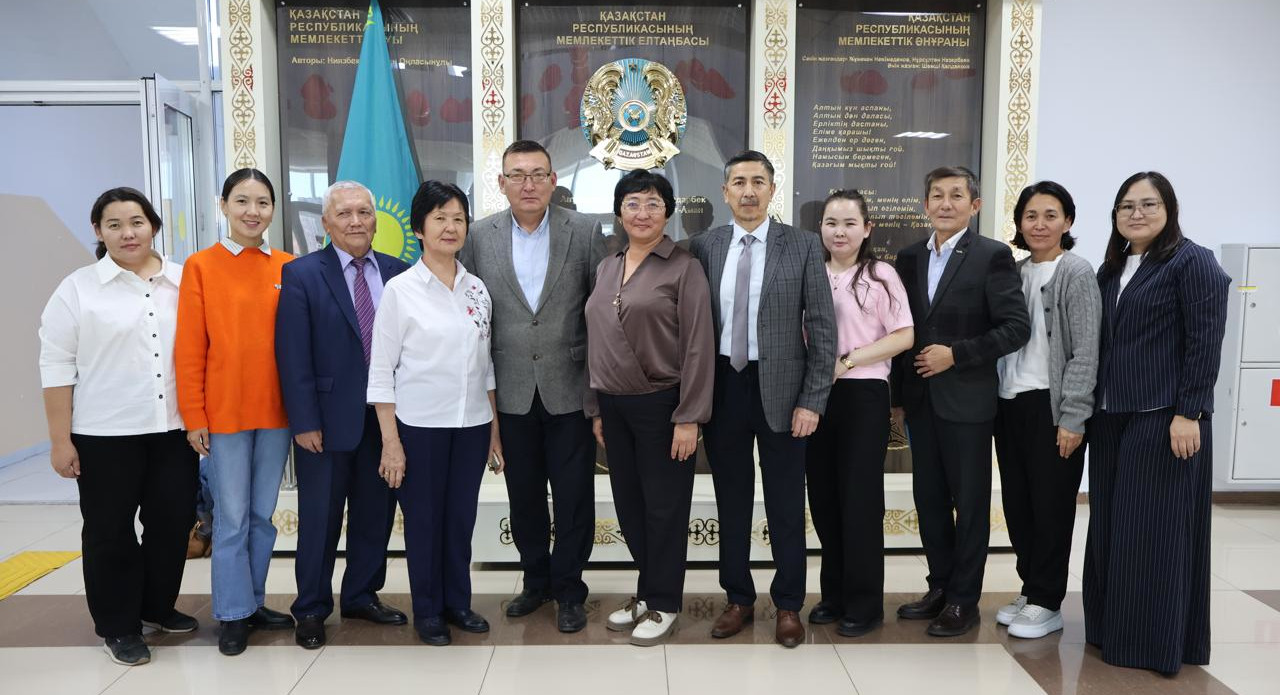
Department of "Computer Engineering and Automation"
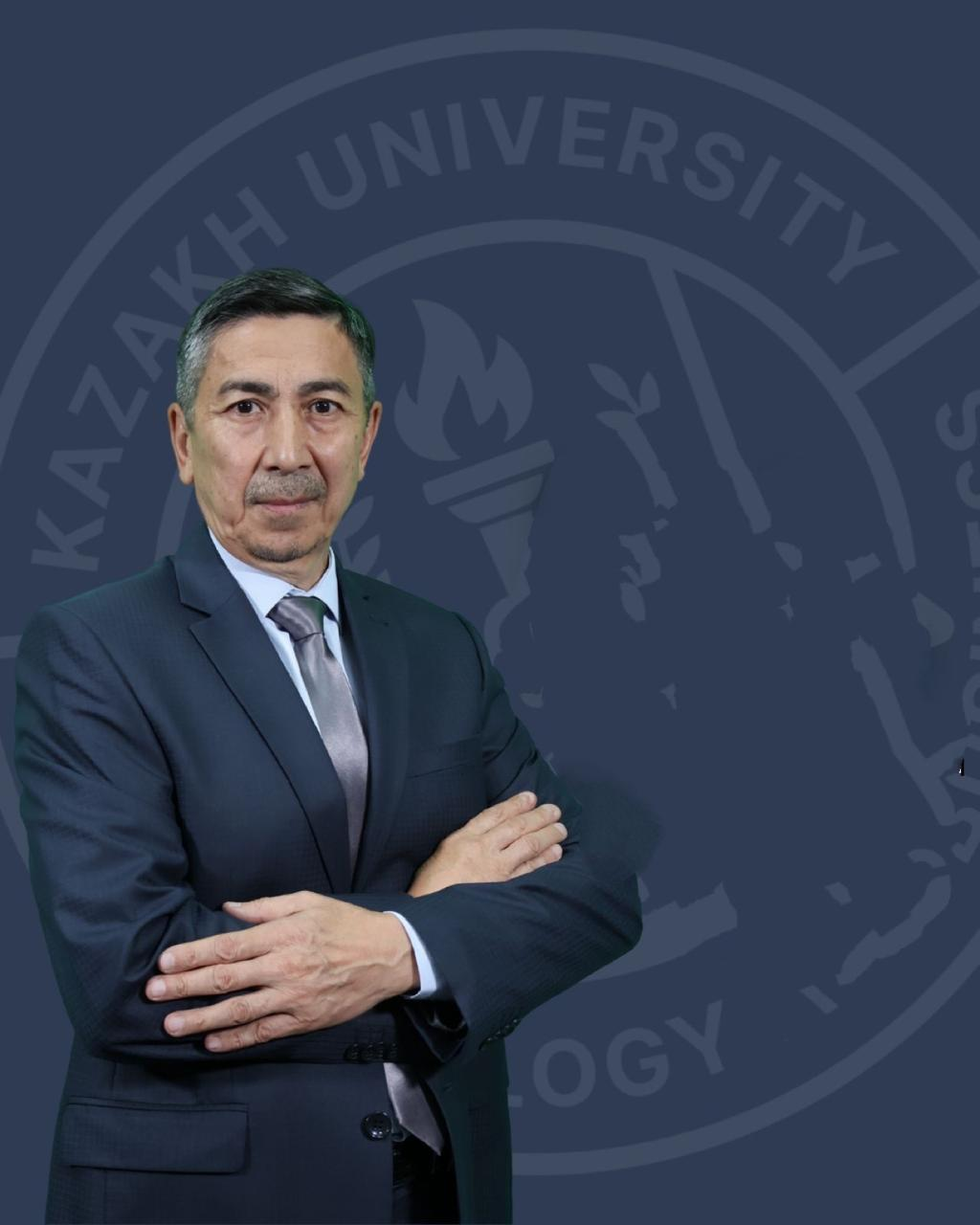
Head of the Department

Akishev Karshiga Maksutovich

Candidate of Technical Sciences, Associate Professor (Associate Professor)

Internal:

164

Email address:

q.akishev@kaztbu.edu.kz

Office :

3/506

About the department

In 2025, the Department of Computer Engineering and Automation was separated from the Department of Information Technology of the Faculty of Technology at the Kazakh University of Technology and Business named after K. Kulazhanov.

The department trains highly qualified, competitive specialists of the new generation with modern knowledge and practical skills in the fields of artificial intelligence, automation, and digital energy systems.

The main goal of the department is to ensure the high quality of the educational process and to promote the development of scientific research in the field of computer engineering and automation.

The department sets the following tasks:

  • Improvement of educational programs in accordance with the requirements of the labor market and Industry 4.0 standards;
  • Development of partnerships with enterprises for practice-oriented learning;
  • Implementation of scientific developments in the real sector of the economy;
  • Training engineers capable of creating innovative solutions and contributing to the digital transformation of Kazakhstan.

The mission of the department is to train highly qualified specialists with modern knowledge and practical skills in computer engineering, automation of production and information processes, capable of developing and implementing innovative solutions for the digital transformation of industry, energy, transport, and other sectors of the economy.

Teaching staff

For the 2025–2026 academic year, the department has 22 employees, including 12 full-time teachers, 3 external part-time teachers, 3 internal part-time teachers, 4 practice instructors, and 2 educational support staff.

The full-time faculty of the department consists of 1 professor, 1 acting professor, 2 associate professors, 1 assistant professor, 1 PhD, and 6 masters.

The academic staff of the department has a 50% degree-holding rate.

All teachers of the department systematically undergo advanced training courses in both their subjects and teaching methodology.

In addition to educational activities, the department’s teachers are engaged in scientific and research work, publishing articles in international scientific journals indexed in the Scopus and Web of Science databases. Two teachers are heads of scientific and contractual projects.

Training and support staff:

  • Laboratory assistant – Otkenova D.
  • Laboratory assistant – Toktar A.

Practitioners:

  • Smanov T.D.
  • Bolpakov E.K.

Invited scientists:

  • Biibosynov B.Y.
  • Kochegarov I.I.
  • Karpov V.I.
Academic staff

Full Name 

Academic Degree

Position

1

Akishev K.M.

Candidate of Technical Sciences (PhD equiv.)

Head of Department

2

Serimbetov

Candidate of Technical Sciences (PhD equiv.)

Dean, Acting Associate Professor

3

Tulegulov A.D.

Candidate of Physico-Mathematical Sciences

Associate Professor

4

Bektenov M.B.

Doctor of Technical Sciences

Professor

5

Nurmagambetov M.Sh.

Candidate of Agricultural Sciences

Acting Professor

6

Alimkhanova A.Zh.

PhD Doctor

Senior Lecturer

7

Zharmagambetova G.M.

Master of Technical Sciences

Senior Lecturer

8

Amangeldina M.A.

Master of Technical Sciences

Senior Lecturer

9

Kuzhukhanova Zh.A.

Master of Technical Sciences

Senior Lecturer

10

Tolegenova A.B.

Master of Technical Sciences

Senior Lecturer

11

Akbarova A.

Master of Technical Sciences

Senior Lecturer

12

Tleubayeva A.O.

Master of Technical Sciences

Senior Lecturer

13

Sattykova B.E.

Master of Technical Sciences

Assistant

Bachelor's Programs

6B06155 Artificial Intelligence

Duration of study: 4 years.

Objective: To train highly qualified specialists with knowledge and skills in the development, implementation and operation of artificial intelligence systems, machine learning and big data analysis. Specialists will be able to solve applied problems using modern AI technologies and automate intelligent processes in various fields.

Degree awarded: Bachelor's degree in Information and Communication Technologies in the educational program 6B06104 "Computer Engineering and Software".

List of specialist positions:

  • Developer of artificial intelligence systems
  • Machine Learning Specialist
  • Big Data Analyst
  • Natural Language Processing (NLP) Specialist
  • Computer Vision Engineer
  • Developer of intelligent systems
  • Specialist in robotics and automation
  • Data Scientist

Functions and activities:

  • Development and implementation of machine learning and deep learning algorithms;
  • Big data analysis and processing, knowledge extraction and creation of predictive models;
  • Design and development of intelligent systems and applications;
  • Testing and optimization of AI models for various applications;
  • Work with neural networks, computer vision, speech and text recognition;
  • Implementation and maintenance of intelligent automation systems for business processes.

Basic and specialized disciplines studied:

  • Introduction to Artificial Intelligence
  • Machine learning and deep learning
  • Data analysis and visualization
  • Natural Language Processing (NLP)
  • Computer Vision and Pattern Recognition
  • Python programming for AI
  • Neural networks and deep learning architectures
  • Algorithms and data structures
  • Big data and distributed computing
  • Robotics and intelligent systems
  • Ethical and legal aspects of AI
  • Cloud computing and virtualization
  • Application of AI in industry and medicine
6B07116 Automation and control

Duration of study: 4 years

Objective: To train competitive graduates with knowledge and skills in the development and implementation of software, administration, and operation of IT infrastructure of computing systems of varying scales.

Degree awarded: Bachelor's degree in Information and Communication Technologies under the educational program 6B07116 “Computer Engineering and Software”.

List of specialist positions:

  • Software developer
  • DevOps engineer
  • Software design specialist
  • Software testing specialist
  • System administrator
  • Mobile application developer
  • Computer game developer
  • Database administrator
  • Software maintenance specialist
  • Technical documentation specialist
  • Big data specialist
  • Quality management specialist

Functions and activities:

In the professional field of software engineering:

  • Software development, modification, and control;
  • Designing the structure and content and/or writing computer code;
  • Creation and maintenance of system software, application software, databases, mobile applications, and services;
  • Software performance testing under various load conditions;
  • Identification of security vulnerabilities.

In professional work on digital technologies and computer systems:

  • Use of software tools and environments for creating digital signal processing systems, robotic complexes, and smart systems;
  • Assembly and installation of the organization's server equipment;
  • Configuration and maintenance of the organization's server equipment.

Basic and specialized disciplines studied:

  • Algorithmization and programming
  • Algorithms and data structures
  • Programming in C++
  • Software development tools
  • Object-oriented programming: Java
  • Programming of game applications
  • Development of web-based applications
  • Mobile application development
  • Object-relational databases
  • Data analysis using R / Big Data
  • Machine learning using Python
  • Application development using Go
  • 3D graphics / AR, VR
  • System programming
  • Parallel programming
  • Fundamentals of cybersecurity
  • Blockchain technology
  • IT project management
  • Information theory and coding
  • Computational algorithms for applied tasks
  • Machine-oriented programming (Assembler)
  • Architecture and organization of computer systems
  • Digital electronics
  • Network technologies
  • Programming of microcontrollers
  • Embedded systems
  • Architecture and algorithms of robotic systems
  • Virtualization technologies
6B07133 Digital energy

Duration of study: 4 years

Objective: To train specialists capable of designing, operating, and optimizing digital energy management systems, including intelligent power systems, distributed energy sources, and Smart Grid technologies. Providing competencies in digitalization and automation of energy processes using IT and IoT technologies.

Degree awarded: Bachelor's degree in Information and Communication Technologies in the educational program 6B06104 "Computer Engineering and Software".

List of specialist positions:

  • Digital Power Systems Engineer
  • Energy Automation Specialist
  • Energy Management Engineer
  • Analyst of Power Systems and Big Data
  • Internet of Things (IoT) Specialist in the Energy Sector
  • Designer of Smart Grid Systems
  • Cybersecurity Engineer of Power Systems
  • Technical Specialist in Renewable Energy Sources

Functions and activities:

  • Design and implementation of digital monitoring and management systems for power systems;
  • Automation and optimization of energy production and distribution processes;
  • Analysis and forecasting of energy consumption using digital technologies;
  • Integration of renewable energy sources and storage systems;
  • Ensuring the safety and sustainability of energy systems;
  • Development of software and hardware solutions for smart grids and IoT in the energy sector.

Basic and specialized disciplines studied:

  • Fundamentals of Digital Energy
  • Automation and Control of Energy Processes
  • Smart Grid Systems and Smart Grids
  • The Internet of Things (IoT) in the Energy Sector
  • Data Analysis and Machine Learning in the Energy Sector
  • Renewable Energy Sources and Storage
  • Electric Power Industry and Electric Machines
  • Cybersecurity of Energy Systems
  • Programming of Microcontrollers and Embedded Systems
  • Data Collection and Processing Systems (SCADA)
  • Digital Transformation Technologies in the Energy Sector
  • Architecture of Computer Systems and Digital Electronics

Master's Programs

7M07188 Automation and Control

Duration of study: 2 years

Objective: To train masters of technical sciences with engineering and scientific thinking, pedagogical skills, carrying out research and management activities based on methods of building computing and software systems in the field of software engineering.

Degree awarded: Master of Technical Sciences in the educational program 7M06104 "Computer Engineering and Software".

List of specialist positions:

  • Specialist in the development of high-load applications
  • Architect of the IT infrastructure
  • Information technology infrastructure engineer
  • Cloud IoT systems engineer
  • IoT systems software engineer
  • Cloud computing specialist
  • Project manager in the field of information technology
  • Software engineer
  • System engineer
  • Computer hardware design engineer
  • Engineer-developer of embedded systems
  • Programmer-analyst
  • QA engineer
  • System architect
  • System analyst
  • Software architect
  • Scientific researcher in the field of ICT

Functions and activities:

  • Design and development of high-load systems
  • Administration and operation of software and hardware of highly loaded systems
  • Ensuring the interaction and management of IoT devices
  • Organization and coordination of IT projects
  • Project management of the organization's IT infrastructure
  • Analysis of software requirements
  • Software engineering
  • Writing code and developing software programs
  • Management of system architecture development

Basic and specialized disciplines studied:

  • Cloud technologies
  • Big Data management
  • Software development technologies for real-time systems
  • Distributed computing technology
  • Software testing
  • Computer vision
  • Machine learning algorithms
  • Algorithmic foundations of intelligent systems
  • Development of decentralized applications
  • Digital signal processing
  • Embedded software and systems
  • Design of mechatronic systems
  • Organization and planning of scientific research
  • Theory and technique of scientific experiment in computer engineering

Scientific activity

Faculty members, master’s students, and undergraduates of the department are actively engaged in research activities aimed at advancing modern technologies in automation, computer engineering, and digital control systems.

Main research areas of the department:

  • Digitalization of industrial and energy systems;
  • Development and implementation of intelligent control systems;
  • Modeling and optimization of technological processes;
  • Industrial IoT platforms and cyber-physical systems;
  • Artificial intelligence and machine learning methods in control systems;
  • Security and reliability of automated systems.

The teaching staff of the department effectively use modern digital tools and conduct research and applied projects aligned with the industrial and innovative development priorities of Kazakhstan’s economy.

The results of their research are integrated into the educational process, enriching laboratory and practical training, and contributing to the development of course materials, diploma projects, and master’s theses.

Scientific works of the department’s faculty members — Akhishev K.M., Tulegenov A.D., and Serimbetov B.A. — have been published in national and international journals, including those indexed in Scopus and Web of Science. Their research focuses on the digitalization of control systems, implementation of intelligent technologies, and the development of industrial automated complexes.

Material and technical equipment

Department of Computer Engineering and Automation (C.E.A.) has a modern material and technical base for conducting the educational process. In total, there are 6 classrooms, including:

  • 3 laboratory rooms;
  • 1 computer lab;
  • 2 general-purpose classrooms.

The total area of the educational and laboratory facilities is 319.7 m². All laboratories and classrooms are equipped with the necessary instruments and devices for conducting both educational and research activities.

Laboratory classes are held within the educational programs “Automation and Control,” “Digital Energy,” and “Artificial Intelligence.” The computer lab is equipped with up-to-date computers and has access to the Internet.

The department also has multimedia projectors, interactive whiteboards, and an electronic database of teaching materials actively used by faculty and students in the learning process.

Department classrooms and laboratories:

  • 1/404 — Laboratory of Physics and Electrical Engineering;
  • 1/413 — Classroom;
  • 1/414 — Classroom;
  • 3/505 — Training Laboratory “CHP and Automation”;
  • 3/506 — Training Laboratory “CHP and Automation”;
  • 3/504 — Computer Lab.

Professional practice

In the field of science, innovation and education, the Department of Computer Engineering and Automation cooperates with a number of leading companies, such as: Ekibastuzskaya GRES-1 LLP, Astana Ceramic LLP, EcostroyNII-PV LLP, AG Tech LLP, as well as with universities – L.N. ENU Gumilyov University, ATU, PSU (Russia), RGGU (Russia), Lucknow University (India) and other educational and scientific institutions.

The basis of the production and pre-graduate practices of the students of the department are enterprises and organizations with which contracts have been concluded for the internship of students in educational programs.:

  • 6В07155 – Artificial intelligence;
  • 6В07116 – Automation and control;
  • 6В07133 – Digital energy;
  • 7М07188 – Automation and Control.

Among the department's partners: Ekibastuzskaya GRES-1 LLP, Astana Ceramic LLP, EcostroyNII-PV LLP, AG Tech LLP and others

Internship places are determined depending on the specifics of educational programs and taking into account the possibility of further employment of students.

The department pays great attention to the formation of a list of practice bases, carefully choosing organizations where managers are highly responsible for teaching and accompanying students during practice.

In order to harmonize the content of educational programs of leading Kazakhstani and foreign universities, the university implements an academic mobility program for students.

Academic mobility

Academic mobility is one of the key areas of the university’s international activity. It contributes to improving the quality of education, increasing the effectiveness of research activities among students and academic staff, enhancing their professional, cultural, and educational levels, improving management systems, and establishing both external and internal integration links of the Kazakh University of Technology and Business named after K. Kulazhanov.

To optimize the educational process and ensure student mobility, the formation of curricula provides for the maximum unification of study plans in related specialties, as well as the possibility for students to complete part of their educational program (field of study) at other universities, including foreign partner institutions.

Academic mobility of undergraduate and graduate students includes the mandatory transfer of earned academic credits in accordance with established procedures and may also include the completion of educational or industrial internships at partner institutions.