Department

Department of Social and Humanitarian Disciplines

Its main goal is to cultivate in students a humanistic worldview, civic consciousness, patriotism and professional culture. It provides instruction in the social and humanitarian disciplines for all educational programs.

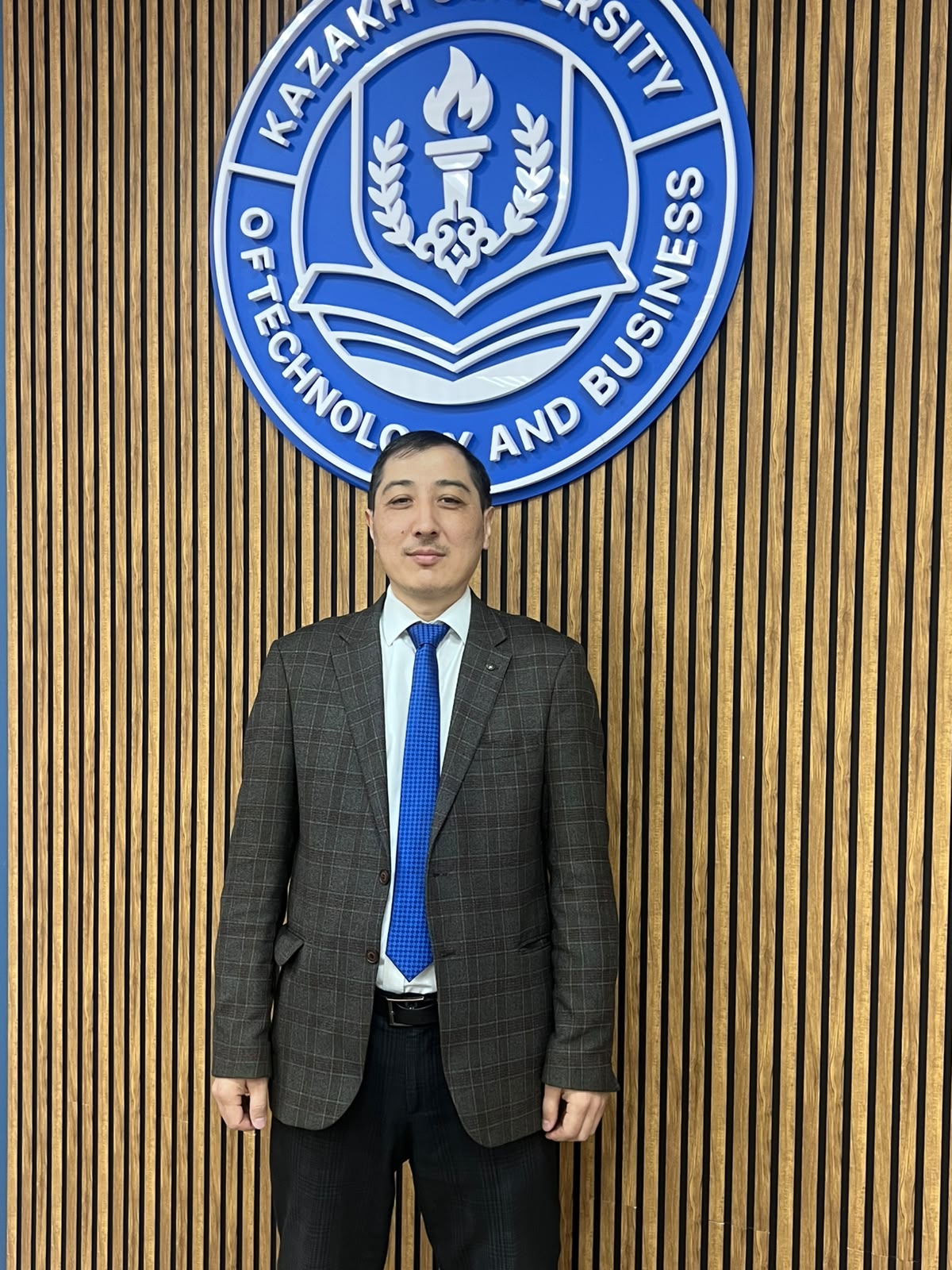
Magauyanov Dauren Abiltaevich Head of the Department, Doctor of Philosophy (PhD), Assistant Professor
Faculty of Technology Department faculty
Magauyanov Dauren Abiltaevich

Magauyanov Dauren Abiltaevich

Head of the Department, Doctor of Philosophy (PhD), Assistant Professor

Office:

1/300

Department Mission

1.Formation of "Adal Azamat" (Honest Citizen) and Legal Education. In accordance with the Head of State’s concept, the department’s key priority is fostering a cult of knowledge, honesty, hard work, and patriotism among students. We integrate the principles of the "Adal Azamat" program into all training courses, focusing on the formation of internal culture and integrity. In view of the adoption of the new 2026 Constitution of Kazakhstan, one of the main goals of the department is the profound study of the country's Basic Law, as well as the 2025–2030 Concept for promoting the ideology of law and order in society. We strive to ensure a high level of legal literacy among students, an understanding of the mechanisms of the state structure, and the protection of constitutional rights.

2.Humanization of Higher Education. Providing high-quality training for undergraduate and graduate students in social sciences and humanities, developing soft skills, critical analysis of social processes, and leadership qualities.

Mission of the Department:

The mission of the Department of Social Sciences and Humanities is to form a holistic worldview, high spirituality, and an active civic position in future specialists. As a general education department, we create the intellectual and ethical foundation upon which the professional development of students of any profile is based. Our task is to prepare not just a qualified worker, but a harmoniously developed personality capable of critical thinking and social responsibility.

Areas of Activity:

·Educational Activity: Implementation of academic programs in History, Philosophy, Fundamentals of Law, Political Science, Sociology, and Psychology. Special emphasis is placed on an interdisciplinary approach where humanitarian knowledge intersects with issues of law, ethics, and economics.

·Research Work: The department conducts active research in the field of modern social policy in Kazakhstan, the history of statehood, and the evolution of the legal system. The faculty's research interests center on studying the modernization of public consciousness and the mechanisms of implementing constitutional reforms.

·Educational and Ideological Work: The department acts as a moderator for dialogue platforms, round tables, discussions, and debates on current issues of the development of Kazakhstani society, forming in young people a stable immunity to corruption and legal nihilism.

The Department of Social Sciences and Humanities plays a unifying role in the university's educational space, ensuring interdisciplinary continuity. Our contribution lies in creating a socio-legal environment where every student gains the knowledge necessary for successful self-realization in a dynamically developing Kazakhstan.

Department History

3. Department History

Establishment and Institutional Development

The history of the Department of Social Sciences and Humanities dates back to 2010. Since its founding, the department has established itself as a vital component of the university structure, providing students with fundamental training and shaping their worldview and cultural values.

The department’s development has always progressed in line with national educational priorities. For instance, in 2013, following the trajectory of the "Kazakhstan-2050" Strategy and recommendations from the Interdepartmental Group for the Study of National History, the unit was renamed the Department of History of Kazakhstan and Social Sciences and Humanities (Academic Council Resolution No. 8 dated August 29, 2013). This step allowed for a stronger emphasis on the study of the country’s historical heritage.

Eight years later, in 2021, as part of an academic structure optimization, the department returned to its original name—Social Sciences and Humanities (Academic Council Resolution No. 8 dated March 29, 2021)—marking a new stage in the integration of the humanities.

Due to the expansion of educational tasks and the need for narrower specialization, in June 2025, the University Academic Council decided to spin off related disciplines from the department. This led to the creation of two new independent structural units:

·The Department of State and Foreign Languages;

·The Department of Physical Education.

This reorganization allowed the Department of Social Sciences and Humanities to focus entirely on the in-depth teaching of socio-political, legal, and philosophical sciences.

Departmental Leadership: Continuity and Professionalism

The successful development and high prestige of the department are the results of the fruitful work of distinguished scholars and educators. The principle of leadership continuity has preserved academic traditions while constantly updating teaching methodologies:

1.Rabiga Kabdulovna Baimbetova, Candidate of Philosophical Sciences, Associate Professor. She was at the origins of the department, laying the foundation for its scientific and methodological framework (Head of Department in 2010–2014 and 2018–2020).

2.Kulyanda Kabylseitovna Kanafiieva, Candidate of Pedagogical Sciences, Associate Professor. She headed the department during 2015–2018 and 2020–2021, paying special attention to pedagogical innovations.

3.Kanagat Tursymbaevna Altaibekova, Candidate of Philological Sciences, Associate Professor. She led the unit from 2021 to 2025, ensuring the stability of educational processes during a period of transformation.

4.Vladimir Sarsembaevich Eshpanov, Doctor of Historical Sciences, Professor. He served as Head of Department during the structural changes from June to November 2025.

5.Dauren Abiltaevich Magauyanov, Doctor of Philosophy (PhD), Assistant Professor. He has headed the department from December 2025 to the present, continuing the course toward the digitalization of the educational process, the development of research activities, and improving the quality of training for future specialists.

Current Status and Educational Potential

Today, the Department of Social Sciences and Humanities boasts a powerful academic and teaching staff. The intellectual potential—represented by Doctors and Candidates of Sciences, PhDs, and Masters—enables the implementation of educational programs that meet the global challenges of the 21st century.

Currently, the department's educational activities focus on the following key disciplines:

For Undergraduate (Bachelor's) Programs:

·History of Kazakhstan and Philosophy;

·Social and Political Knowledge Module (Sociology, Political Science, Cultural Studies, Psychology);

·"Economics, Entrepreneurship, Law, and Financial Literacy" Module: Fundamentals of Economics and Entrepreneurship, Fundamentals of Law and Anti-Corruption Culture, Fundamentals of Financial Literacy.

For Graduate (Master's) Programs:

The department provides a high-quality theoretical base for future researchers through the following disciplines:

·History and Philosophy of Science;

·Management Psychology;

·Higher Education Pedagogy.

Currently, the Department of Social Sciences and Humanities is a crucial structural subdivision of the university, providing fundamental training for students in the field of social and humanitarian knowledge. The department's activities are aimed at forming a holistic worldview in students, a deep understanding of the patterns of development of society, the state, culture, and the individual, as well as developing analytical thinking, communication skills, and social responsibility.

Our Methods and Activity Priorities

4. Our Methods and Priorities

The department's activities are based on the synergy of academic traditions and innovative approaches. We aim for humanitarian knowledge to become a real tool for personal and professional effectiveness.

Key Vectors of Work:

1.Ideological Education: Implementation of the "Adal Azamat" concept to form a value system based on integrity and patriotism.

2.Legal Enlightenment: In-depth study of the 2026 Constitution of Kazakhstan and the 2025–2030 law and order ideology.

3.Intellectual Development: Providing high-quality instruction in Philosophy of Science, Higher School Pedagogy, and Management Psychology for Master’s students.

Modern Educational Technologies and Digitalization:

·Digital Ecosystem: Utilizing Learning Management Systems (LMS), cloud technologies, and multimedia platforms.

·Interactive Formats: Discussion platforms, debates, brainstorming, and case studies for social and legal analysis.

·Blended Learning: Combining traditional teaching with online courses and video lectures from leading experts.

Practice-Oriented Training:

·Economics, Entrepreneurship, Law, and Financial Literacy Module: Students analyze real cases in labor, civil, administrative, and anti-corruption law.

·Socio-Political Module: Focuses on civic responsibility and psychological training to develop emotional intelligence, stress management, and leadership.

Scientific Potential:

·For Faculty: Participation in grant projects and publications in high-impact journals (Scopus, Web of Science, and CQASHE MSHE RK).

·For Students: Student research circles, annual conferences, and essay competitions on the modernization of Kazakhstan.

International Cooperation:

The department integrates into the global scientific space through international conferences and exchange of experience regarding teaching history, law, and philosophy in technical universities.

Bachelor's Degree Programs

Disciplines:

·History of Kazakhstan;

·Philosophy;

·Socio-Political Knowledge Module (Sociology, Political Science, Cultural Studies, Psychology);

·Module "Economics, Entrepreneurship, Law, and Financial Literacy": Fundamentals of Economics and Entrepreneurship, Fundamentals of Law and Anti-Corruption Culture, Fundamentals of Financial Literacy.

Master's Degree Programs

Disciplines:
The department provides a high-quality theoretical base for future researchers through:

·History and Philosophy of Science;

·Management Psychology;

·Pedagogy of Higher Education.

Research and Scientific Activities

Key Research Areas:

Research is focused on philosophy, pedagogy, psychology, socio-political processes, law, and the development of students' personal and professional competencies.

Publication Activity:

Faculty members actively publish in Scopus, Web of Science, and CQASHE (KKSON) journals, as well as authoring monographs and textbooks.

Events:
The department regularly organizes methodological seminars, round tables, and conferences featuring guest professors, statesmen, and members of Parliament.

Research Circles:

The student research circle "Humanitarian Workshop" operates under the department, focusing on developing research skills and involving students in preparing reports, articles, and projects.

AI Assistant
Welcome. The virtual assistant provides reference information based on the university's official website materials, including pages, news, the rector's blog, faculty data, and other published resources. Please submit your question in a clear form.